When something goes wrong with the electricity in your home or workplace, finding someone you can trust becomes a priority. Whether it’s a faulty socket, flickering lights, a tripping fuse board or a planned electrical installation, choosing the right electrician can make all the difference.
Searching for an electrician near me may bring up several local companies, but how do you know which one is suitable for your needs?
A good electrician should do more than simply fix the immediate problem. They should understand electrical safety, identify potential risks, explain the work clearly and provide reliable solutions that suit your property.
This guide covers what to look for when hiring a local electrician, the different electrical services available, common warning signs and practical questions to ask before arranging an appointment.
Why Choosing a Qualified Local Electrician Matters
Electrical systems are essential to everyday life, but problems with wiring, circuits and electrical equipment can create serious safety risks if they are not handled correctly.
Hiring a suitably qualified electrician helps ensure that electrical work is completed safely and meets relevant UK regulations.
A reliable electrician can also identify issues that may not be immediately obvious. For example, a socket that frequently stops working might be connected to a loose connection, a damaged cable or a wider circuit problem.
Rather than repeatedly dealing with the same fault, a professional can investigate the cause and recommend an appropriate solution.
Benefits of hiring a local electrician
- Local availability: Electricians who regularly work in your area may be better placed to arrange convenient appointments.
- Familiarity with different properties: Experienced local electricians often encounter a variety of domestic and commercial electrical installations.
- Clear communication: You can discuss the problem, understand the proposed work and ask questions before proceeding.
- Ongoing support: An established local electrical company may be able to help with future inspections, maintenance and installations.
For property owners across Kent, Dall Engineering provides electrical services covering domestic and commercial requirements.
What Types of Electrical Services Might You Need?
Not every electrical problem requires the same service. Understanding the type of work involved helps you choose an electrician with suitable experience.
| Electrical service | Common requirements | Best suited for |
|---|---|---|
| Electrical repairs | Faulty sockets, switches and wiring | Existing electrical problems |
| Electrical installations | Additional sockets, lighting and circuits | Property improvements |
| Electrical fault finding | Repeated tripping, unexplained power problems | Diagnosing faults |
| Emergency electrical services | Dangerous electrical faults and urgent repairs | Immediate safety concerns |
| Electrical inspections | Wiring condition checks and EICRs | Safety assessments |
| Consumer unit work | Circuit protection upgrades and replacements | Electrical system improvements |
| EV charger installation | Dedicated electric vehicle charging equipment | Homes and workplaces |
Domestic Electrical Services
Home electrical work can range from replacing a damaged fitting to installing additional circuits.
Common projects include new sockets, lighting improvements, cooker connections, consumer unit work and partial or full rewiring.
Before starting any installation, the electrician should assess the existing system to determine whether it can safely support the proposed changes.
Commercial Electrical Services
Businesses often have different electrical requirements from residential properties.
Commercial installations may involve distribution equipment, emergency lighting, electrical testing, maintenance and specialist systems.
An electrician working in a commercial environment should understand the relevant installation requirements and the importance of reducing unnecessary disruption to business operations.
Emergency Electrical Services
Some faults require urgent professional attention rather than a routine appointment.
If you experience a potentially dangerous electrical issue, Dall Engineering provides information about its 24/7 emergency electrician services in Kent.
When Should You Contact an Emergency Electrician?
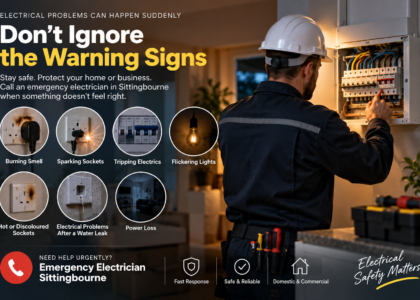
Electrical problems are not always immediately visible. Some warning signs should be investigated quickly because they may indicate a potentially dangerous fault.
1. Burning Smells Around Electrical Fittings
A burning smell coming from a socket, switch or consumer unit could indicate overheating or damaged electrical components.
Stop using the affected equipment and seek professional assistance. If there is smoke or fire, move to safety and contact emergency services.
2. Repeated Circuit Breaker Tripping
Circuit breakers and residual current devices are designed to disconnect electricity under certain fault conditions.
A circuit that repeatedly trips may have a problem with connected equipment, wiring or another part of the installation.
Avoid repeatedly resetting the device without understanding the cause.
3. Sparking or Damaged Sockets
Unexpected sparking, scorch marks, cracked sockets or unusually hot electrical fittings should not be ignored.
Stop using the affected socket and arrange an inspection by a competent electrician.
4. Water Near Electrical Equipment
Water entering sockets, light fittings or electrical distribution equipment can create serious hazards.
Do not touch wet electrical equipment or enter an area where electrical contact with water may be dangerous. Seek qualified assistance.
5. Sudden Loss of Power
A power cut can result from a local electricity network issue or a fault within your property.
Check whether neighbouring properties are also affected, provided it is safe to do so. In Great Britain, 105 is the electricity network emergency number.
If the problem appears limited to your installation or there are signs of electrical danger, contact an appropriately qualified electrician.
How to Choose the Right Electrician Near You
Finding a reliable electrician involves more than choosing the first business that appears in your search results.
The following factors can help you make a confident decision.
Check Qualifications and Professional Competence
Ask whether the electrician is appropriately trained and experienced for the work you require.
Where an electrician claims membership of a recognised competent person or electrical registration scheme, verify that claim.
It is also worth asking whether the electrician can provide the appropriate electrical installation documentation after completing relevant work.
Look for Relevant Experience
Some electricians specialise in domestic installations, while others focus on commercial systems, fault diagnosis or renewable energy technologies.
Choose someone with experience relevant to your property and project.
For example, installing an EV charger involves different considerations from replacing an ordinary light fitting.
Read Customer Reviews Carefully
Customer feedback can provide useful insight into reliability, communication and workmanship.
Rather than focusing only on overall ratings, look for comments about punctuality, safety, problem-solving and how clearly the electrician explained the work.
Recent reviews describing projects similar to yours are particularly useful.
Ask About Insurance and Workmanship
A professional electrical company should be able to explain what insurance it holds and whether its completed work is covered by any workmanship guarantee.
Check the applicable terms and any exclusions before agreeing to the work.
Confirm Availability and Service Coverage
An electrician located nearby may not necessarily offer appointments in your postcode or provide the type of service you require.
Before booking, confirm the service area, availability and whether your particular electrical problem can be addressed.
Electrician Hiring Checklist
Use this checklist before arranging routine electrical work.
Before booking
0/8 completedConfirm the electrician covers your areaCheck relevant qualifications and claimed registrationAsk about experience with similar electrical workCheck insurance and applicable workmanship guaranteesRead recent customer reviewsDescribe the electrical problem clearlyAsk what inspection or testing will be requiredConfirm whether appropriate certification will be provided
For dangerous electrical faults, prioritise safety and urgent assistance over completing a routine comparison.
What Happens During a Professional Electrical Inspection?
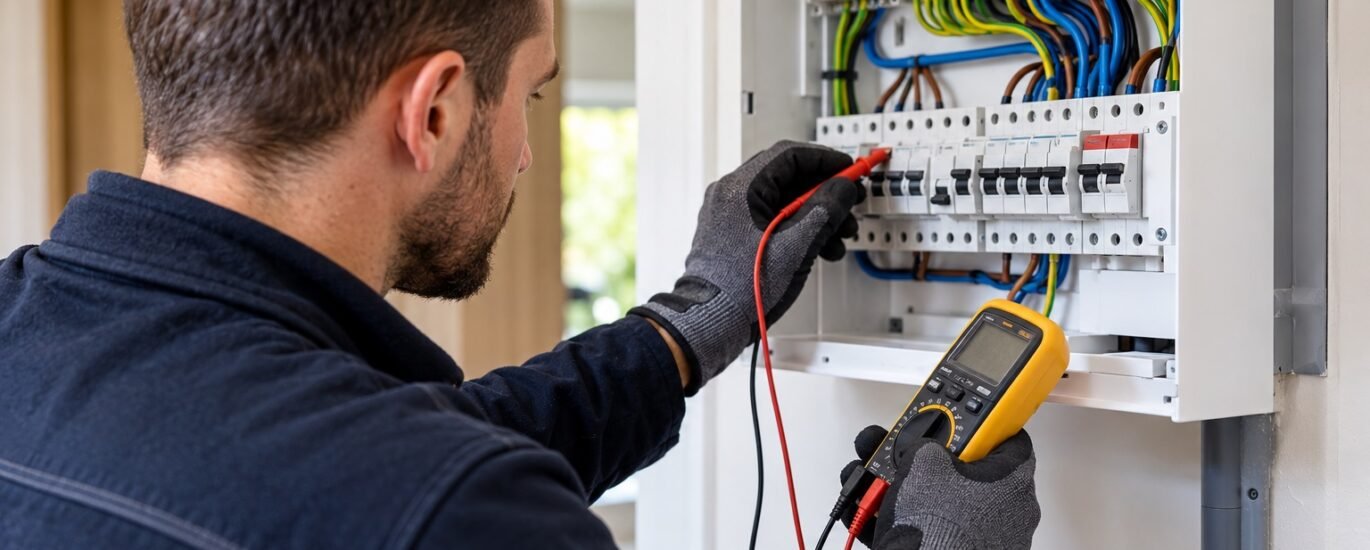
If you have an unexplained electrical issue, the electrician will usually begin by discussing the symptoms.
They may ask when the problem started, which areas of the property are affected and whether the fault occurs when particular appliances are used.
Depending on the problem, an electrician may then:
- Carry out an initial visual inspection.
- Safely isolate relevant circuits where necessary.
- Perform appropriate electrical tests.
- Identify damaged or faulty components.
- Explain the findings and recommended repairs.
- Complete authorised work and carry out relevant testing.
The exact process depends on the electrical installation and the fault being investigated.
An inspection does not automatically mean a major repair will be necessary. The purpose is to understand the condition of the electrical system and determine the appropriate next steps.
Why Electrical Testing and Maintenance Are Important
Electrical installations can deteriorate over time.
Connections may loosen, components can become damaged and older wiring may no longer be suitable for how a property is used.
Routine checks and professional inspections help identify defects before they develop into more serious problems.
What Is an Electrical Installation Condition Report?
An Electrical Installation Condition Report, commonly called an EICR, assesses the condition of an existing electrical installation.
The inspection helps identify deterioration, defects and safety issues that may require further attention.
An EICR is particularly relevant when assessing an older property, reviewing an installation’s condition or meeting applicable landlord responsibilities.
The recommended inspection interval depends on the property, its use and applicable regulations.
Dall Engineering lists electrical inspections and EICRs among its electrical services.
Common Mistakes to Avoid When Hiring an Electrician
Even a straightforward electrical job requires careful consideration.
Choosing someone without checking their experience: An electrician may be competent in one area of work but have limited experience with a specialist installation.
Ignoring minor warning signs: A socket that frequently becomes warm or a circuit that repeatedly trips should be assessed rather than ignored.
Attempting unsafe DIY repairs: Opening electrical equipment or working on wiring without suitable competence can expose you to serious hazards.
Failing to discuss the scope of work: Explain the symptoms or installation requirements clearly so the electrician understands what you need.
Overlooking testing and documentation: Ask what testing is appropriate and whether a certificate or report should be provided.
Avoiding these mistakes can help make the hiring process safer and more straightforward.
How to Prepare for an Electrician’s Visit
A little preparation can help an electrical appointment run more smoothly.
If it is safe, make a note of when the problem occurs and which rooms or appliances are affected.
For planned installation work, think about the location of new sockets, switches or lighting.
Ensure the electrician can access relevant areas, such as the consumer unit or the room where work is required. Do not move or handle damaged electrical equipment to prepare the space.
If you are arranging work for a rental property or commercial premises, make sure the relevant person can authorise access and discuss the installation.
Frequently Asked Questions About Hiring an Electrician
1. How do I find a reliable electrician near me?
Start by looking for electricians who cover your area and offer the service you need. Check relevant qualifications, experience, reviews and insurance before arranging an appointment.
2. What qualifications should a local electrician have?
An electrician should have appropriate technical competence for the work being undertaken. Relevant training, experience and verified professional registration can help demonstrate suitability.
3. When should I call an emergency electrician?
Seek urgent help when electrical equipment is sparking dangerously, producing smoke, overheating or showing other signs of a serious electrical fault. Call emergency services if there is an immediate threat to life or a fire.
4. Can an electrician identify why my fuse board keeps tripping?
Yes. A competent electrician can carry out fault-finding tests to investigate repeated tripping and identify the appropriate corrective action.
5. How often should household electrics be inspected?
Inspection intervals depend on the property’s age, condition and use. Owner-occupied homes are commonly recommended to have periodic inspection at least every ten years, while some properties, including private rentals in England, have additional requirements.
6. Can a local electrician install additional sockets?
Yes. A competent electrician can assess the existing circuits, determine whether they can accommodate the proposed work and install additional sockets where appropriate.
7. Will I receive a certificate after electrical work?
Documentation depends on the type of work. Certain installations require an Electrical Installation Certificate or Minor Electrical Installation Works Certificate. Ask your electrician which documents apply.
8. Can an electrician help with EV charger installation?
Yes, provided they have the relevant competence and installation experience. EV charging equipment requires suitable electrical design, protection and installation.
You can explore Dall Engineering’s EV charger installation service for more information.
9. Does Dall Engineering offer emergency electrician services?
Yes. Dall Engineering advertises 24/7 emergency electrical services for customers across Kent, including Gillingham and surrounding areas. Confirm current attendance availability directly with the company.
Looking for a Reliable Electrician in Kent?
Finding the right electrician starts with understanding your electrical problem and choosing a professional who has the relevant experience to help.
Whether you’re dealing with recurring electrical faults, planning new installations or arranging an electrical inspection, proper assessment and safe workmanship are essential.
Dall Engineering provides electrical installation, repair, fault-finding and inspection services for domestic and commercial customers across Kent.
For urgent faults, learn more about its emergency electrician services.
For general enquiries or planned electrical work, contact Dall Engineering to discuss your requirements.