Owning an electric vehicle in the UK is becoming more convenient and affordable, even for households without a private driveway. Thanks to new government rules introduced on 21 October 2026, drivers in England may now be able to install qualifying cross-pavement EV charging systems without applying for planning permission.
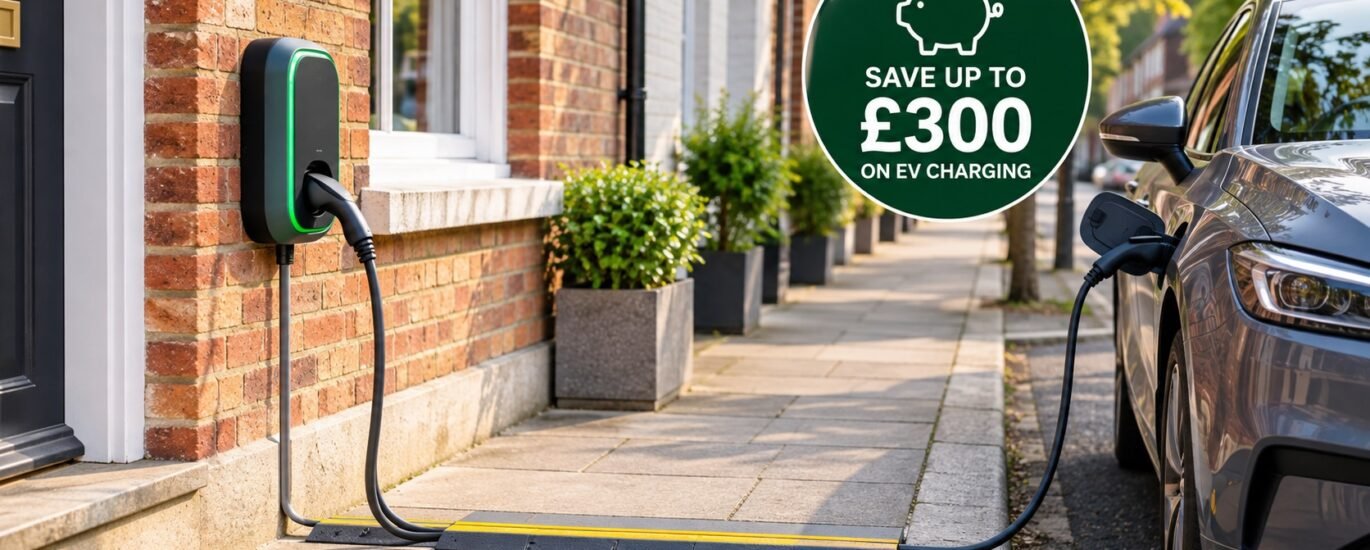
This change could save eligible homeowners up to £300 in installation-related planning costs, while making it easier to access cheaper domestic electricity rates.
For EV owners across Kent, Maidstone, Chatham, Gillingham, Rochester and surrounding areas, this is welcome news. However, installing a home charging point without off-street parking still requires careful planning, a suitable electrical setup and, importantly, the relevant local authority permissions.
At Dall Engineering, we specialise in professional EV charger installation across Kent. Whether you already own an electric vehicle or are considering switching, our electricians can help you explore suitable home charging options, assess your electrical system and install a charging point appropriate for your property.
What Are the New UK EV Charging Rules for Homes Without Driveways?
Previously, homeowners wanting to charge an electric car parked on the street could face additional planning requirements when installing a cross-pavement charging solution.
Under the new regulations effective from 21 October 2026, qualifying cross-pavement EV charging installations in England can benefit from permitted development rights. This removes the need for a separate planning application in eligible cases.
The UK Department for Transport estimates that the change could save drivers up to £300.
A cross-pavement charging solution uses a specially designed channel embedded in the pavement. This allows an EV charging cable to travel from a residential property to a vehicle parked on the street, without leaving a loose cable across the pedestrian walkway.
However, homeowners should understand that removing the planning application requirement does not mean they can install a pavement channel themselves.
Permission from the relevant highway authority is still required, and additional conditions may apply depending on the property and location. Not all councils currently permit these installations.
This is why checking feasibility before purchasing equipment or arranging installation is essential.
How Does Cross-Pavement EV Charging Work?
For many people living in terraced houses or properties without driveways, the biggest obstacle to home EV charging is the pavement between the house and the parked vehicle.
A cross-pavement system offers a potential solution.
The process generally involves installing a suitable home EV charger at the property and connecting it to a dedicated electrical circuit. An authorised pavement channel then provides a designated route for the charging cable to reach the parked vehicle.
When properly designed and approved, the arrangement can help reduce pedestrian trip hazards while allowing the driver to use their domestic electricity supply.
A typical setup involves:
- Home EV charging point: A suitable charger is installed at the residential property.
- Dedicated electrical supply: The charging point is connected to an appropriately designed and protected circuit.
- Approved pavement channel: A cross-pavement solution is installed by an authorised contractor with the relevant highway authority’s permission.
- Vehicle connection: The charging cable is routed through the channel to the electric vehicle.
- Safety checks: The completed electrical installation is tested to confirm that it meets the applicable requirements.
Because roads, pavements and parking arrangements differ between properties, the suitability of this solution must be assessed individually.
How Much Could Drivers Save Under the New Rules?
The most immediate benefit is the potential saving of up to £300 from no longer needing a planning application for qualifying installations.
However, the financial advantages could extend beyond the initial installation.
1. Lower installation-related costs
Removing unnecessary planning requirements may reduce both administrative costs and delays.
The £300 figure is a potential planning-related saving, not a guaranteed discount on the price of an EV charger or electrical installation.
2. Access to cheaper home electricity
Drivers who depend entirely on public charging networks may pay considerably more per unit of electricity than those using suitable domestic tariffs.
The government says home EV charging can cost as little as 2p per mile under favourable conditions.
Actual costs will depend on the electricity tariff, vehicle efficiency, charging losses and when the vehicle is charged.
3. Potential long-term running-cost savings
The government has highlighted potential running-cost savings of up to £1,750 from access to cheaper home charging.
These figures are illustrative rather than guaranteed. Savings depend on driving habits, electricity prices and the alternative charging options available.
4. More convenient everyday charging
Home charging may allow drivers to schedule charging overnight instead of making regular trips to public charging stations.
A suitable smart charger can make it easier to manage charging sessions, monitor energy consumption and take advantage of compatible off-peak tariffs.
Can You Install an EV Charger Without a Driveway in Kent?
Potentially, yes.
The new national rules make qualifying cross-pavement charging solutions easier from a planning perspective, but approval remains dependent on the relevant highway authority.
If you live in Maidstone, Chatham, Gillingham, Rochester, Dartford, Canterbury, Ashford or another part of Kent, the first step is to determine whether your proposed charging arrangement is acceptable to the local authority responsible for the pavement.
Several factors can influence the decision, including:
- The width and condition of the pavement.
- Pedestrian accessibility and public safety.
- Whether an approved pavement channel can be installed.
- Existing underground utilities and infrastructure.
- Property restrictions, including protected locations.
- The position of the proposed charger.
- Access to suitable on-street parking.
An approved pavement channel does not give a homeowner exclusive rights to the parking space outside their property.
A professional assessment can help establish whether a proposed home EV charger is technically suitable before proceeding with the remaining permissions.
How Dall Engineering Can Help With Home EV Charger Installation
At Dall Engineering, we understand that every home has different electrical requirements. Installing an EV charger involves more than attaching equipment to an external wall.
Our professional EV charger installation services in Kent are designed to help customers find reliable and safe charging solutions that suit their properties, vehicles and daily routines.
1. Home electrical assessment
Before recommending a charger, our electricians can assess your existing electrical installation and available capacity.
We consider the electricity supply, consumer unit, charging demand, cable route and proposed charger position.
This helps determine whether additional electrical work may be necessary.
For homes without driveways, we can also discuss the electrical considerations involved in a proposed cross-pavement charging arrangement, subject to local authority approval.
2. Choosing the right EV charger
Not all EV charging points offer the same features or charging capabilities.
Dall Engineering can help customers select a suitable charger based on their vehicle, property and electricity supply.
For many UK households, a 7.4kW smart EV charger can be a practical option where the available electrical capacity supports it.
Depending on the charger, features may include:
- Scheduled charging during cheaper electricity periods.
- Smartphone connectivity.
- Energy usage monitoring.
- Dynamic load management.
- Compatibility with suitable solar PV installations.
Our aim is to recommend an installation that works safely and efficiently for your circumstances.
3. Professional EV charger installation
Once the proposed installation has been assessed and the necessary requirements have been satisfied, Dall Engineering can carry out the home charging point’s electrical installation.
Our work can include installing a dedicated circuit, mounting the charger, providing appropriate electrical protection, connecting the equipment and completing the required electrical testing and commissioning.
For cross-pavement projects, any pavement channel works must be separately authorised and carried out by contractors accepted by the relevant highway authority.
Dall Engineering can help customers understand the charger-side electrical requirements and identify where separate highway permissions or specialist pavement works are needed. Highway works and their approval are not included automatically in a standard charger installation.
4. Smart EV charging solutions
A smart home charger can provide greater control over your charging routine.
For example, customers with suitable off-peak electricity tariffs may be able to schedule their vehicle to charge when electricity is cheaper.
This can help make everyday EV ownership more economical, especially for households using their vehicles for daily commuting.
Dall Engineering can advise on suitable smart charging equipment and the features most relevant to your needs.
5. EV charging and solar PV integration
Homeowners considering renewable energy may also benefit from exploring how solar panels and EV charging can work together.
Dall Engineering provides both EV charger installation and solar PV installation services across Kent.
With compatible equipment and the correct system design, surplus solar electricity may be used to charge an electric vehicle, potentially reducing the amount of energy purchased from the grid.
The suitability of this arrangement depends on the property, solar generation, vehicle availability and charging equipment.
Why Choose Dall Engineering for EV Charger Installation in Kent?
Choosing a professional installer is important for electrical safety, reliability and long-term performance.
Dall Engineering provides electrical, EV charging and solar PV services for residential and commercial customers across Kent.
With more than 15 years of electrical industry experience, our team understands the importance of assessing the complete electrical system rather than simply fitting a charger.
Customers choose Dall Engineering for our:
Professional electrical expertise: We assess supply capacity, electrical protection and charger requirements before installation.
Practical charging advice: We help customers understand their options and choose equipment suited to their properties.
Smart charging solutions: We install suitable charging equipment with modern energy management features.
Local Kent coverage: Our service area includes Maidstone, Chatham, Gillingham, Rochester, Dartford, Canterbury, Ashford, Sittingbourne and surrounding locations.
Electrical and renewable energy experience: As well as EV charging, we provide electrical installation and solar PV services.
Whether you have a private driveway or are investigating a new cross-pavement charging solution, our team can help you understand the electrical side of your project.
Are There Government Grants for EV Charger Installation?
Alongside the new planning rules, eligible residents may be able to benefit from government EV charging grant schemes.
Certain schemes support qualifying households with on-street parking, renters, flat owners and other eligible applicants.
However, eligibility, funding levels, deadlines and installer requirements vary between schemes.
The potential £300 planning-cost saving is separate from any financial assistance available through an EV charging grant.
Dall Engineering’s EV charger service includes support for eligible OZEV grant installations. Customers should check the current government requirements and confirm their eligibility before proceeding.
Visit the official GOV.UK website for the latest grant guidance.
Frequently Asked Questions
Can I install an EV charger at home without a driveway?
Yes, it may be possible using an authorised cross-pavement charging solution. However, the arrangement must meet applicable planning conditions, electrical requirements and local highway authority rules.
Do I still need planning permission for cross-pavement EV charging?
From 21 October 2026, qualifying installations in England can benefit from new permitted development rights. Some properties and locations remain subject to restrictions, and highway authority approval is still required.
Will every homeowner save £300?
No. The government estimates potential savings of up to £300 in planning-related costs. The actual saving depends on whether the installation previously required a planning application and on the circumstances of the project.
Can I run an EV charging cable directly across the pavement?
You should not leave an unprotected cable trailing across a public pavement. An approved cross-pavement charging solution is needed where applicable, together with the necessary highway authority authorisation.
Does Dall Engineering install home EV chargers in Kent?
Yes. Dall Engineering provides residential EV charger installation services across Kent, including Maidstone, Gillingham, Chatham, Rochester, Dartford and surrounding areas.
Can Dall Engineering install the pavement channel as well?
Dall Engineering can assess and install the electrical charging equipment and discuss the requirements for a cross-pavement arrangement. Pavement channel installation requires separate highway authority authorisation and an approved contractor. Availability of this work would need to be confirmed for each project.
How long does home EV charger installation take?
A straightforward domestic installation may be completed within several hours once the electrical setup is confirmed. More complex installations, particularly those involving pavement channels, electrical upgrades or third-party approvals, can take longer.
Can I use solar panels to charge my electric vehicle?
Yes, with a suitable solar PV system and compatible charging equipment. Dall Engineering can assess how solar generation and EV charging could work together at your property.
Ready to Explore Home EV Charging? Contact Dall Engineering
The new EV charging rules introduced in October 2026 represent a positive step towards making electric vehicle ownership more accessible to households without private driveways.
While permission from local highway authorities remains essential, eligible homeowners now have a simpler planning route for installing cross-pavement charging solutions.
If you live in Kent and want to install a home EV charger, Dall Engineering can help you take the next step.
Our experienced electricians can assess your property’s electrical requirements, recommend appropriate charging equipment and provide professional EV charger installation services.
Whether you need a standard home charger, a smart charging solution or advice about the electrical requirements of charging without a driveway, get in touch with our team.
Contact Dall Engineering today to discuss your EV charging requirements and request a quotation.
Website: https://dallengineering.co.uk/
EV Charger Installation: https://dallengineering.co.uk/car-charger/
Contact Us: https://dallengineering.co.uk/contact-us/
Sources and further reading
- UK Department for Transport — Drivers to save up to £300 when installing EV chargers at home, 21 October 2026: https://www.gov.uk/government/news/drivers-to-save-up-to-300-when-installing-ev-chargers-at-home-as-government-slashes-unnecessary-red-tape
- UK Government legislation — Cross-pavement solutions: domestic premises: https://www.legislation.gov.uk/uksi/2015/596/schedule/2/part/9/crossheading/class-f-crosspavement-solutions-domestic-premises
- MSN news article supplied as the inspiration for this blog.